

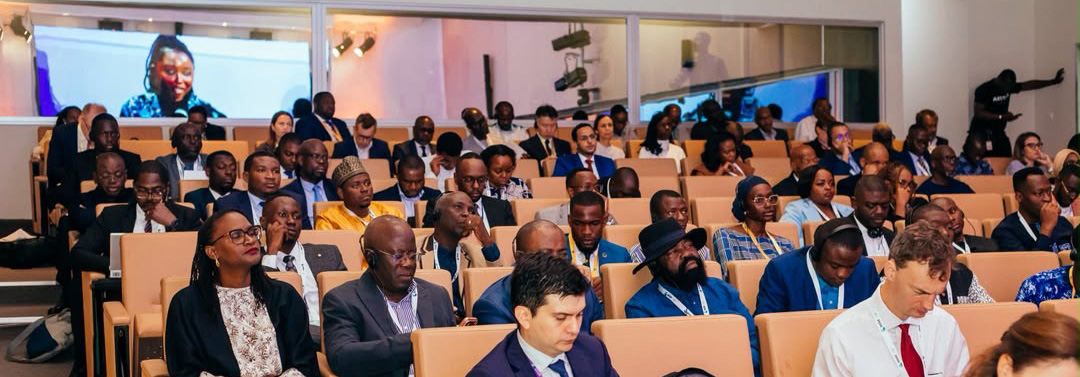
I went expecting to spend three days immersed in debt restructuring frameworks, trade policy, and central bank coordination — and I did. But what stayed with me most wasn’t on the agenda at all. It was the room itself.
Over the course of the conference, I met Nigerians working in Côte d’Ivoire. South Africans working in Ghana. Ethiopians working in Kenya. Practitioners and economists from every corner of the continent, living and working in African countries that were not their own. It kept happening, conversation after conversation, until I couldn’t stop noticing it.
This is brain circulation in its truest form — not professionals returning from abroad on a project basis, but African expertise already in constant motion across African borders, embedding itself in the institutions that are shaping the continent’s future.
Sitting in those sessions, I kept returning to a question that has shaped my work for over a decade: where does the diaspora, in the fullest sense of that word, fit into this story?
Africa’s diaspora, at home and abroad, includes thousands of economists, financial analysts, and policy experts trained at the world’s top institutions, now working inside multilateral bodies, credit rating agencies, investment banks, and, just as importantly, inside African governments and institutions outside their own countries of origin. They understand both languages: the technical grammar of global finance, and the lived urgency of the continent it affects. That dual fluency, wherever in the world or on the continent it happens to sit, is an asset Africa cannot afford to leave on the table.
While in Abidjan, I had the chance to speak with Prof. Urama and his team about exactly this — how the African Diaspora Network and the AfDB might build a more intentional partnership to channel diaspora expertise and capital, wherever that diaspora is based, back into the continent’s economic institutions. It was a candid conversation, and there is real work ahead, but the door is open, and I left Abidjan energized about what’s possible.
Prof. Urama’s keynote was the throughline of the conference for me, and it’s worth pulling out on its own. He walked the room through the arc of global economic partnership — from a unipolar order, to a bipolar one, to today’s multipolar landscape shaped by the United States, China, and the EU together. He spent most of his time in that last frame, and deliberately so: his vision was solution-oriented rather than grievance-oriented, an invitation to build rather than to complain.
ADN is committed to being part of that bigger picture: Africa’s sustainable development, built so that every child, woman, man, family, and community can thrive. The foundation for that kind of ecosystem begins with imagining the future, and building it together, today.
