

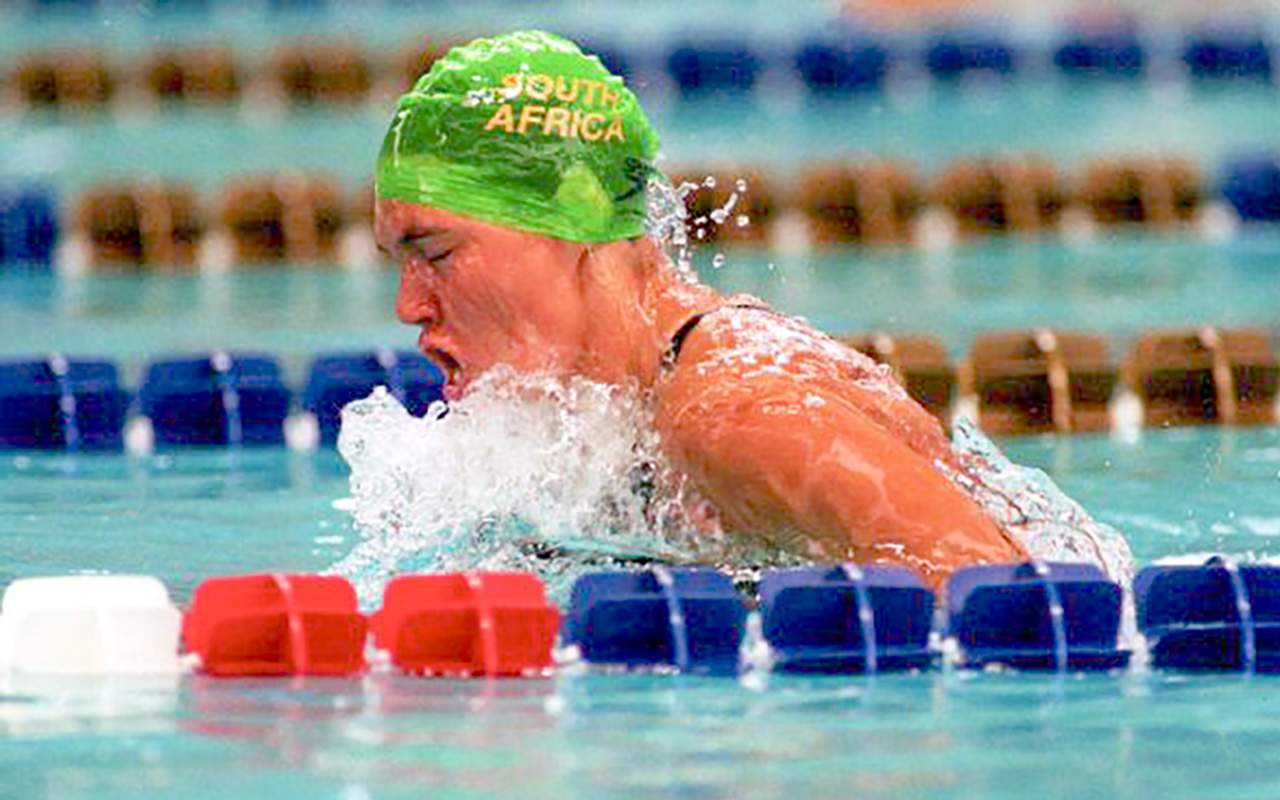
Today, 21 July 2026, marks exactly 30 years since Penny Heyns won South Africa’s first Olympic gold medal of the democratic era. It is a memory South Africans still hold close to their hearts. Heyns is typically modest in recollection, but that moment changed the face of South African sport and laid down a marker for the success of women’s sport today.
And play it down she did. When Heyns touched the wall first in the 100m breaststroke final in Atlanta, strangers across the country embraced. In the water, a 21-year-old checked the scoreboard and frowned.
That is the paradox at the heart of one of South African sport’s greatest nights. Heyns had arrived chasing time, not medals. In the morning heats she had broken her own world record in 1:07.02, slower than the 1:06 she believed was in her, and after a false start, a breakout she rated poor and a media frenzy that swallowed her warm-down beneath gathering thunder clouds, she misjudged her glide into the wall in the final and won gold in a time slower than her morning swim, ending a 44-year national wait with a frown.
“People often ask me how did I feel when I touched the wall and won the gold? And the honest answer is I felt very relieved and obviously happy that I touched first, but at the same time there was a bit of disappointment in the fact that I hadn’t improved my time.”
The First South African Olympic Games Gold Medallist in the Democratic Era, Penny Heyns
The champion in her had learnt the hard way, at a collegiate meet in America, that an extra stroke into the wall costs more than a long glide. So she glided, touched first and turned to the clock before she celebrated. At that stage of her career, she says, world records were what she was really chasing, and the enormity of the Olympics only revealed itself with time.
Even the podium carried a story she would only piece together years later. The anthem sounded strange to her as she stood with gold around her neck, and a decade on she learnt why. “So Capital Radio played the anthem and they broadcasted it in the stadium over the telephone,” she recalls, after the version the organisers held proved incorrect, a world first tucked inside a world first.
The meaning of Atlanta landed two weeks later. Based in the United States for the previous three to four years, Heyns had missed much of her country’s transformation, and it was only at the airport, engulfed by a delirious homecoming reception, that the scale of what she had done began to settle.
She counts it a privilege to have stood at the very beginning of the democratic era alongside marathon champion Josia Thugwane and boxing great Baby Jake Matlala, a generation of pioneers who carried a new flag to the world and brought it home heavier with medals.
At the centre of that era stood Nelson Mandela. Heyns met him first in 1995, then again after breaking the world record in March 1996, and after Atlanta the medallists gathered at the presidential home. In a private lounge, with Thugwane, Marianne Kriel and Hezekiel Sepeng, the president spoke to them about leadership. When a caterer set down a plate of eats, Madiba rose and served the athletes himself. “Not only is he the president, not only is he Nelson Mandela, but at the same time he’s an elder,” she says of a gesture of humility she has carried ever since.
The relationship endured. When Heyns rewrote the record books in 1999, Madiba tracked down her number and phoned her in the middle of the Canadian night to congratulate her, a president following her career not from a briefing document but from genuine personal interest.
By then she had already achieved something no woman has matched since. Two days after her 100m triumph in Atlanta, Heyns won the 200m breaststroke to complete a double that has survived Sydney, Athens, Beijing, London, Rio, Tokyo and Paris. Tatjana Smith won both titles too, she points out, but across two Games. “I never knew that no one had done it before. And I always say that had I known I probably wouldn’t have. So I guess ignorance is a blessing,” she laughs.
Penny Heyns Marks 30 Years Since Historic Atlanta Gold
Penny Heyns reflects on the 30th anniversary of her historic winning of the 100m breaststroke…
Team SA Names Women-Majority Squad for the 2026 Commonwealth Games in Glasgow
As Team SA counts down to the 2026 Commonwealth Games in Glasgow, the women of…

Scarlett le Roux and Isabeau Coetsee Excel at the Africa Aquatics Champs in Algeria
Scarlett le Roux dominated the freestyle pool with five individual gold medals and Isabeau Coetsee…

Hannah Pearse Tears of Joy as Final Day Delivers Three More Commonwealth Games Qualifiers
Hannah Pearse claimed the 200m backstroke gold and her Commonwealth Games spot on the final…

Lara van Niekerk Makes Triumphant Return with Commonwealth Games Qualifier at SA Swimming Championships
Lara van Niekerk celebrated a triumphant return to competition by claiming the 50m breaststroke title…

Aimee Canny Overcomes Kaylene Corbett in Breaststroke Thriller to Book Fourth Commonwealth Games Spot
Aimee Canny powers to her fourth Commonwealth Games qualifying time at the SA Swimming Championships…
Yet ask her to choose her finest hour and she does not choose Atlanta. After the Games she slumped so badly she nearly walked away, which made 1999 all the sweeter: 11 world records in three months, five of the six breaststroke world records held at once, and a birthday gift for Madiba, the 200m record broken twice on Saturday 17 July and the 100m record broken twice on his birthday the following day.
One record eluded her. Eleven records into the blitz, tired and dreaming of holiday, she skipped the 200m short course, certain another chance would come. It never did. “Never wait for another opportunity. Make the most of every single opportunity you have,” she says, a lesson she now hands to every young swimmer she meets.

For a decade after retiring in 2001 she wanted nothing to do with the pool, going near the water only when her global governance duties demanded it. Then, around 2010, she was asked to help some breaststrokers. “The moment I walked onto pool deck, I felt like I have this gut feeling again. I know what to do,” she says, describing a sensation she had last felt as a swimmer.
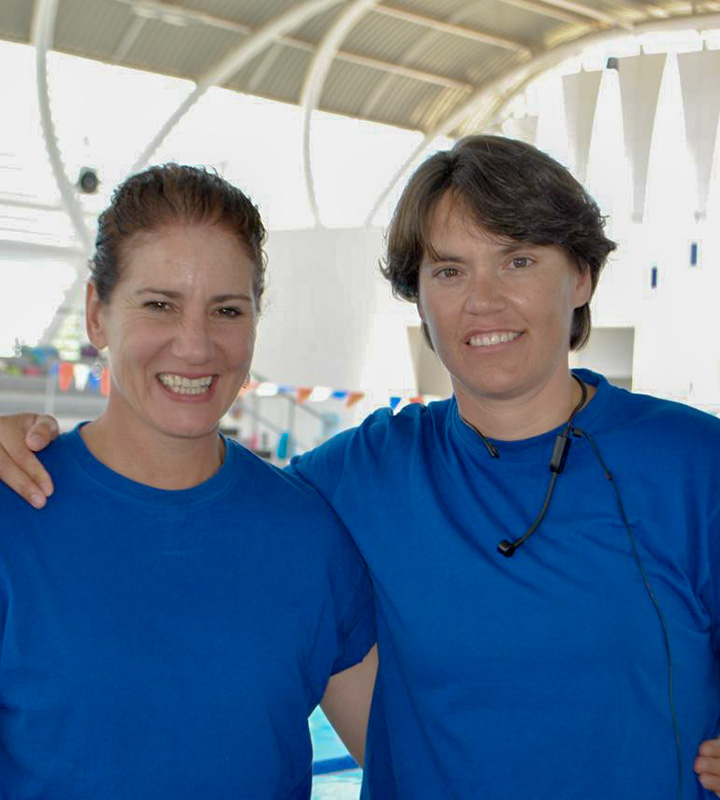
Out of that feeling grew the swim camps she runs today with her business partner Zelda van Vuuren, built deliberately around two rooms: the pool, where technique is corrected, and the classroom, where she teaches the goal-setting, self-talk, visualisation and resilience that carried her to the top. The lessons of her career, she believes, transcend the sport.
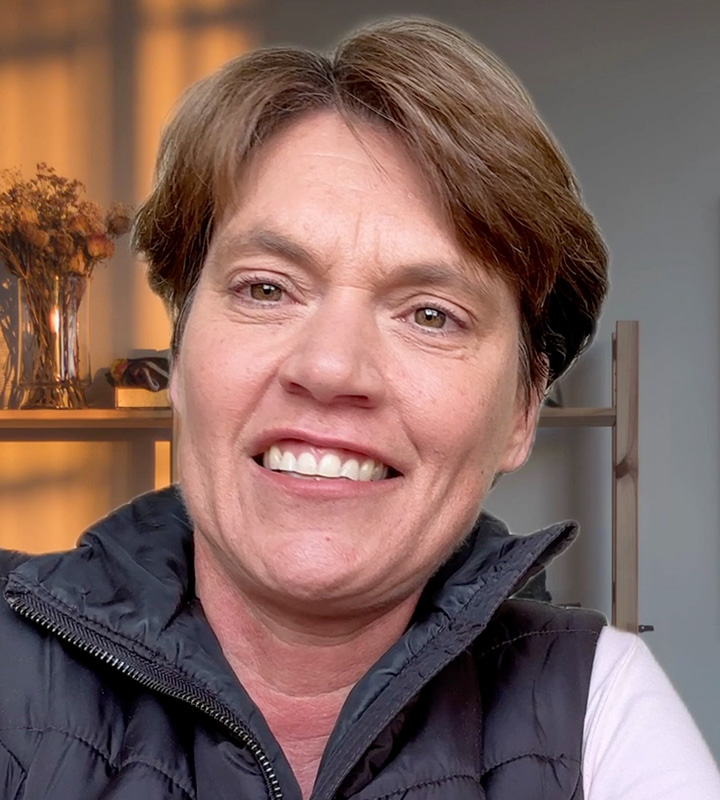
Why stroke correction rather than coaching a team? Her answer lives in a memory from Hillcrest in 1993, when an older coach told a 1:12 swimmer she could one day go 1:09, a crazy idea until a senior swimmer she had grown up admiring quietly said, “I agree”, and everything changed. “It’s more about the person and how can we have them leave the camp or leave the session feeling like I am worth something,” she says of the work she and Van Vuuren do now.
It is why she tells girls who fear they have started too late to relax. She only began focused training at 12, believes late starters weather the teenage plateau better, and wants young athletes chasing their own best rather than teams, medals or records, peaking in their twenties with their love of the water intact.
SA U19 Women Surge Back in Front with Mieke van Voorst Half-Century in Karachi
The SA U19 Women are back in front in their historic Youth T20I series in…
South African Women Begin Namibia Series with 4-0 Victory in World Cup Build-Up
A winning start in Cape Town saw Player of the Match and 50th international cap…
USA U20 Women Prove Too Strong for Junior Springbok Women in Stellenbosch
The Junior Springbok Women showed second-half fight through tries by Siphumelele Mdlalose and Julene Haas,…
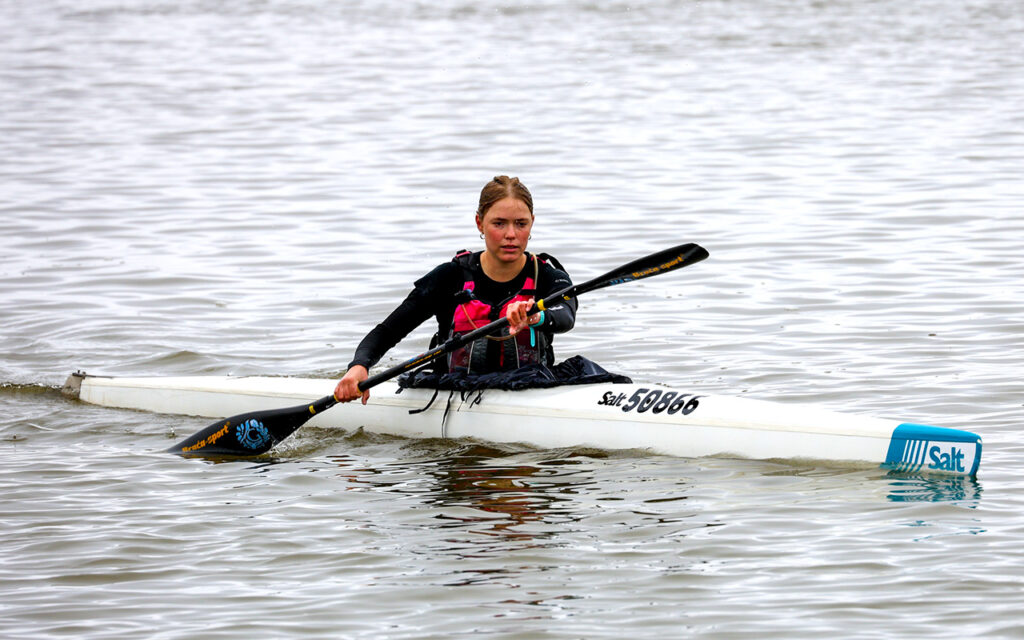
Courageous Neriyah Dill Overcomes to Win Maiden Berg River Canoe Marathon Crown
Neriyah Dill overcame final-day illness to lift her her maiden Berg River Canoe Marathon crown,…
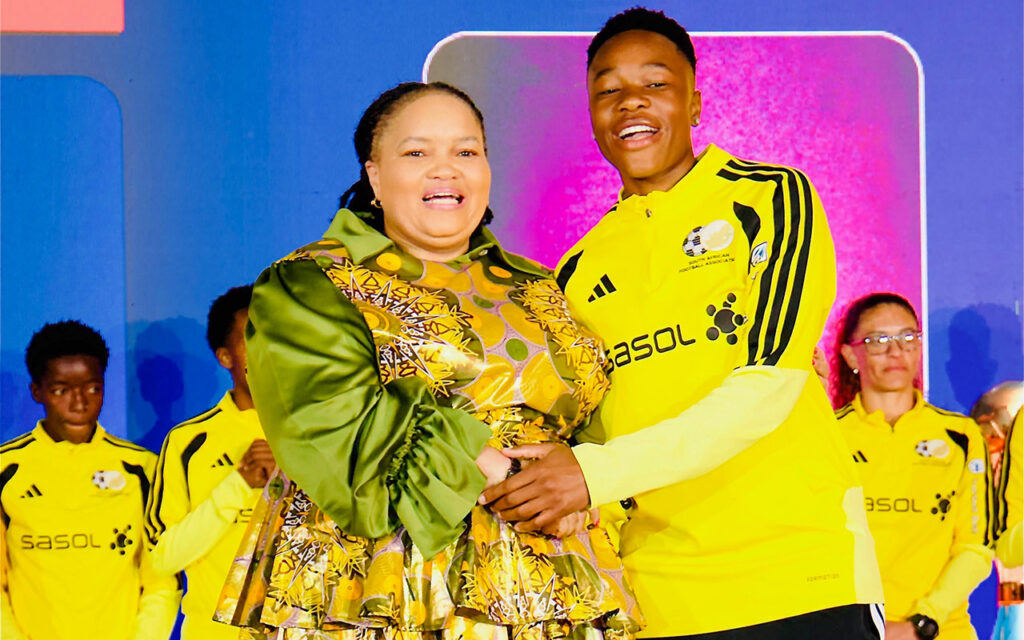
Desiree Ellis Trims Banyana Banyana Squad to 26 for WAFCON Title Chase in Morocco
Dr Desiree Ellis has unveiled the 26 players who will carry South Africa’s hopes at…
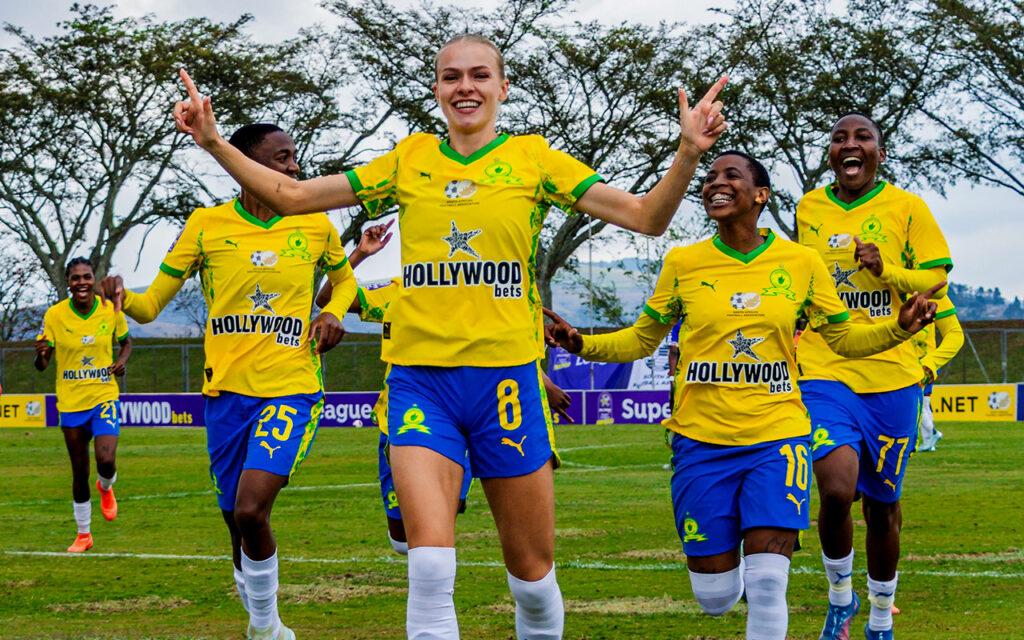
Pause in Hollywoodbets Super League Action After Hammarsdale Festival Thriller
The Hollywoodbets Super League pauses until August with Mamelodi Sundowns Ladies flawless atop the Super…
The torch she lit has been carried far. In Tokyo she watched from the stands as Smith became the next South African woman to win Olympic swimming gold, and wept. “I was more emotional about her achievement than I was about my own,” she admits, adding that watching is worse than racing, because the one watching has no control.
Thirty years on from Atlanta, Heyns is still passing it back as much as forward, urging that the greats who kept her generation in the water through isolation, Karen Muir, Joan Harrison and Esther Brand, be honoured anew. The first golden girl of the democratic era knows better than anyone: every champion is somebody’s reason to believe.
Main Photo Caption: Penny Heyns won the 100m breaststroke at the Atlanta Olympic Games on 21 July 1996 to become South Africa’s first Olympic gold medallist of the democratic era, ending the nation’s 44-year wait for gold. All Photos: Supplied
Photo 2 Caption: Heyns and her business partner Zelda van Vuuren run swim camps and clinics that build technique and mental toughness in young swimmers.
Photo 3 Caption: Heyns treasured a personal relationship with President Nelson Mandela, who honoured the 1996 Olympic medallists after Atlanta.
Photo 4 Caption: Thirty years on from Atlanta, Heyns continues to shape South African swimming through her coaching and mentoring work.
