

Finance and water emerge as defining issues at COP17. PHOTO/UNCCD.
By PATRICK MAYOYO
ULAANBAATAR, Mongolia
Negotiators, ministers, scientists and civil society leaders have entered a decisive phase of global talks aimed at tackling desertification, land degradation and drought, as the 17th Session of the Conference of the Parties (COP17) to the United Nations Convention to Combat Desertification (UNCCD) moves into its final week in the Mongolian capital.
With only days remaining before the conference closes on 28 August, delegates from the UNCCD’s 197 Parties are intensifying negotiations on some of the most politically sensitive and technically complex issues confronting the international community, including land restoration financing, drought resilience, water security, migration, private sector engagement and scientific cooperation.
The summit, being held under the theme “Restoring Land. Restoring Hope.”, is widely viewed as a critical test of the world’s commitment to reversing environmental degradation amid worsening climate pressures and growing geopolitical uncertainty.
The second week of the conference began with a noticeable shift from broad policy statements to intensive text-based negotiations, as countries sought consensus on a series of draft decisions that could shape global land restoration efforts for years to come.
High-level ministerial dialogues have now taken centre stage, accompanied by closed-door contact group meetings where negotiators are attempting to bridge significant differences on key issues.
The stakes are high. According to delegates and observers, the conference comes at a time when droughts are becoming more severe, ecosystems are deteriorating at alarming rates and rural communities across many regions are facing increasing pressure from declining agricultural productivity and water scarcity.
UNCCD Executive Secretary Yasmine Fouad underscored the urgency of the challenge, describing land as one of humanity’s most important assets.
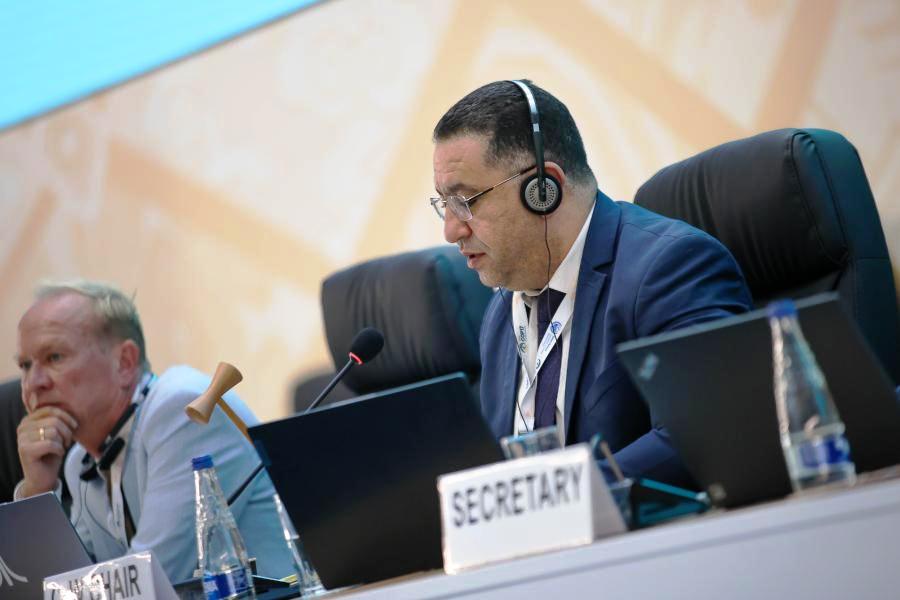
Committee of the Whole (COW) Chair Khalid Cherki. PHOTO/ ENB-IISD – Anastasia Rodopoulou/UNCCD.
“Land is our most vital infrastructure — underpinning food security, water, livelihoods and stability,” she said, warning that deteriorating land conditions contribute directly to lost livelihoods, displacement and growing competition over scarce resources. She stressed that restoring degraded land is not only an environmental imperative but also a development and resilience priority.
Finance and water emerge as defining issues
As negotiations advance, finance and the land-water nexus have emerged as dominant themes.
Delegates are increasingly focused on how countries, particularly developing nations, can access predictable and adequate resources to restore degraded ecosystems and strengthen resilience against drought.
Discussions have highlighted concerns over resource mobilisation, technology transfer and capacity-building support, with several countries arguing that ambitious land restoration goals will remain unattainable without corresponding financial commitments.
The debate has become particularly pronounced within discussions on migration and displacement linked to desertification, land degradation and drought. Delegates have considered proposals urging countries to provide financial resources, technology and capacity-building support to help vulnerable nations implement integrated land restoration and drought resilience measures.
However, differences remain over whether such responsibilities should be directed primarily at developed countries or shared more broadly among all nations.
Water security is also emerging as a cross-cutting concern throughout the negotiations. Delegates have repeatedly stressed the importance of strengthening the relationship between land restoration and water management, recognising that healthy soils and ecosystems play a vital role in sustaining water supplies and improving resilience against drought.
The issue has become increasingly important as many regions experience prolonged dry spells and declining freshwater availability.
Migration debate exposes political sensitivities
Among the most closely watched discussions are negotiations on human mobility, which have revealed both the complexity of the issue and the political sensitivities surrounding it.
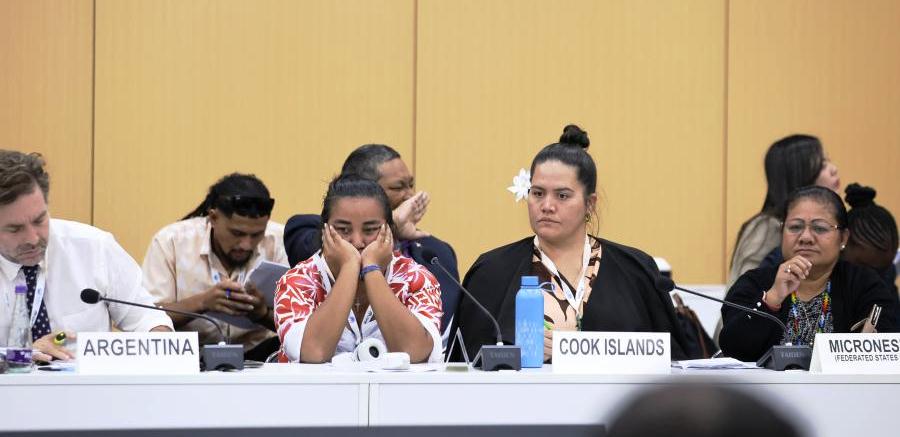
Delegates spent most of the day in contact groups. PHOTO/ ENB-IISD – Anastasia Rodopoulou/UNCCD.
Delegates spent considerable time examining how desertification, land degradation and drought contribute to migration and displacement. The debate follows earlier discussions on pastoralist mobility, an age-old adaptation strategy through which communities move livestock in response to changing environmental conditions.
Experts attending the conference have emphasised that human mobility encompasses a broad spectrum of movement, including migration, displacement and seasonal pastoralist travel.
While pastoralist mobility is often recognised as a sustainable rangeland management practice that can contribute to combating desertification and enhancing carbon sequestration, environmental degradation can also force people to abandon their homes in search of survival opportunities elsewhere.
Supporters of stronger action argue that restoring degraded land and improving drought resilience can help stabilise rural economies, reduce vulnerability and address some of the underlying pressures that drive forced displacement. Yet negotiations remain delicate, with at least one Party reportedly reserving its position on the entire draft decision pending further instructions from its capital.
Private sector role under scrutiny
Another contentious issue concerns the role of business and industry in implementing the Convention.
Negotiators have been debating how best to encourage private sector participation while maintaining transparency and ensuring that commercial interests do not undermine public objectives.
Discussions have included proposals related to integrating business representatives into national delegations and accredited organisations, alongside questions about conflict-of-interest safeguards.
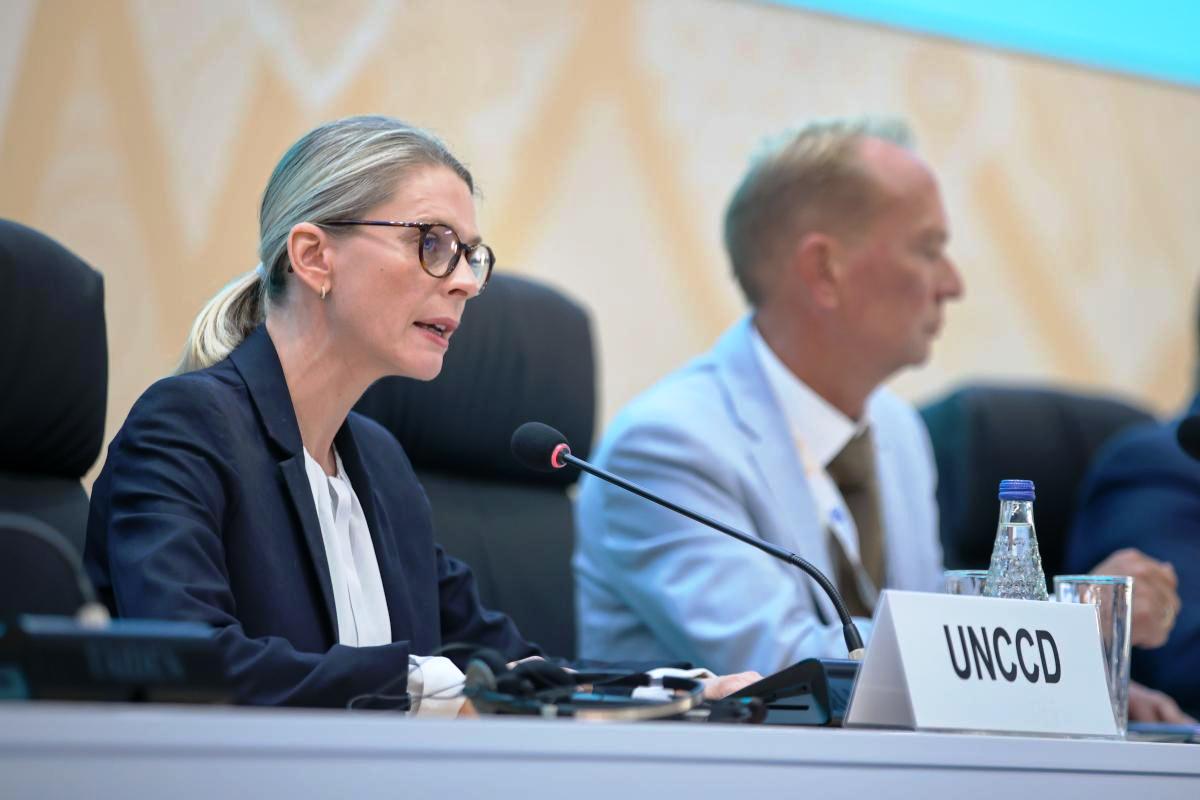
Xenya Scanlon, UNCCD Secretariat. PHOTO/ ENB-IISD – Anastasia Rodopoulou/UNCCD.
Several countries have also debated whether private capital should be viewed as a complement to, rather than a replacement for, public finance. The issue reflects broader global discussions about how to mobilise the enormous investment required to restore degraded landscapes and achieve sustainable development objectives.
Scientific cooperation and data challenges
Beyond the political negotiations, considerable attention has been devoted to strengthening the scientific foundations of the Convention.
Delegates meeting under the Committee on Science and Technology and the Committee for the Review of the Implementation of the Convention have examined ways to improve reporting systems, data quality and scientific assessments.
Discussions have centred on disparities in resources, data accessibility and the challenges many countries face in producing reliable information using standardised methodologies.
Several countries have argued that reporting requirements should remain responsive to national circumstances and capacities, while others have called for greater recognition of nationally validated data and indicators. The debate reflects a longstanding challenge within multilateral environmental agreements: balancing global comparability with national realities.
Negotiators are also attempting to finalise procedures for the future operation of the Science-Policy Interface (SPI), which serves as a bridge between scientific research and policy-making.
Discussions have included how scientific assessments should be prepared, reviewed and communicated to decision-makers. Delegates have debated the format of flagship reports, the role of summaries for policymakers and the financial implications of maintaining a robust scientific advisory process.
Civil society pushes for stronger participation
Civil society organisations, Indigenous Peoples, local communities, women’s groups and youth representatives have used the conference to advocate for greater inclusion in both decision-making and implementation processes.
They have called for improved access to information, stronger communication efforts in local and Indigenous languages and enhanced participation in efforts to counter misinformation. Many stakeholders argue that communities directly affected by land degradation possess valuable knowledge and practical solutions that should play a central role in global responses.
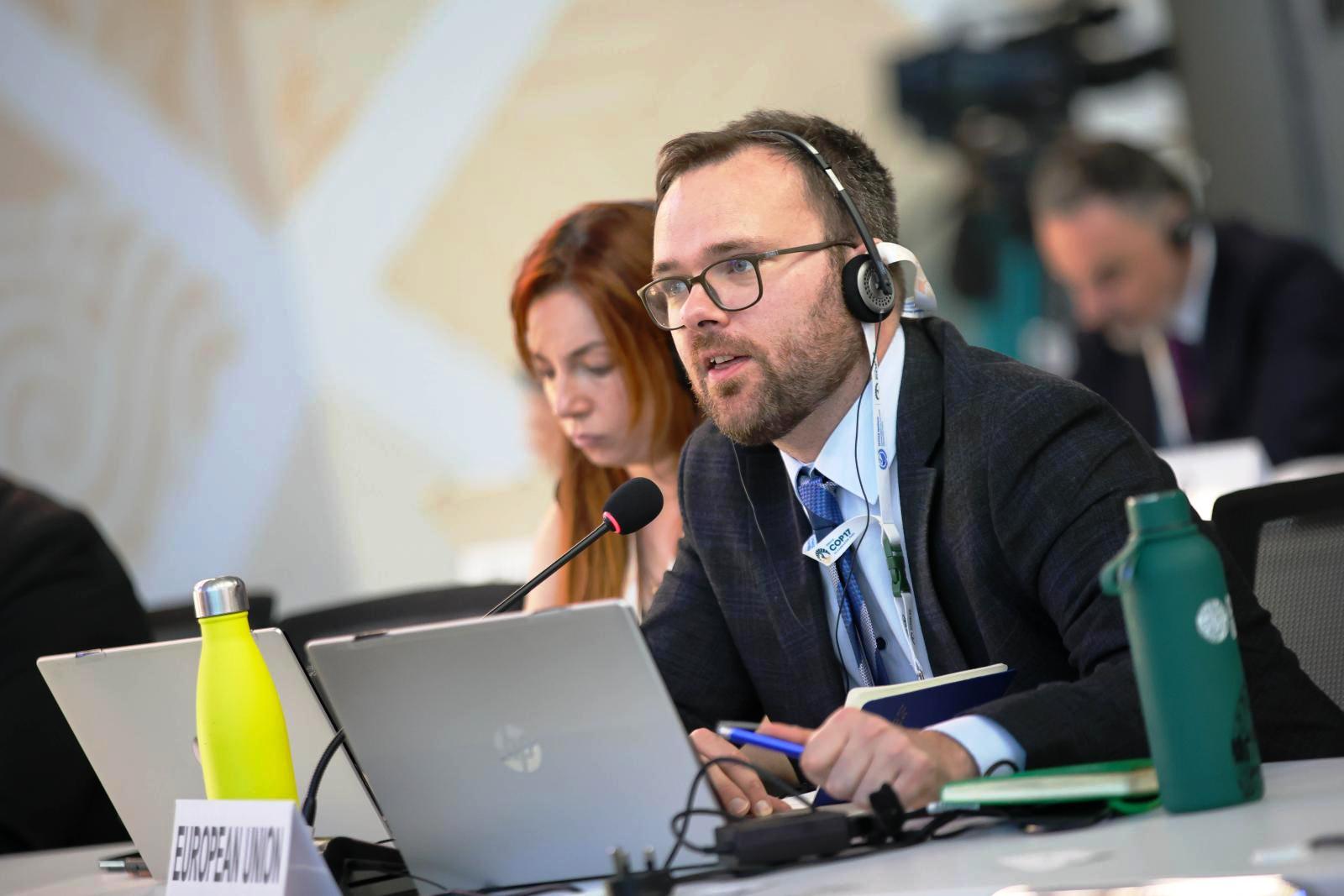
Mícheál Callaghan, EU. PHOTO/ ENB-IISD – Anastasia Rodopoulou/UNCCD.
The issue of participation has also become a procedural matter. Civil society representatives have urged Parties to guarantee meaningful stakeholder involvement at both COP17 and the next conference, arguing that such participation has long been recognised within the Convention framework.
Tensions and signs of progress
Despite signs of momentum, negotiations continue to be hampered by geopolitical divisions and disagreements over priorities.
Several agenda items remain blocked after a week of discussions, and delegates have acknowledged that some negotiations are proving more difficult than anticipated. Observers report that differences over migration, drought responses and references to broader international frameworks have slowed progress in some contact groups.
Yet there are also indications that compromise may still be possible.
Negotiators working on potential responses to drought have reportedly begun exploring alternative approaches after earlier discussions stalled. Alongside proposals for a legally binding protocol or a non-binding framework, delegates are now considering more flexible options, including voluntary target-setting processes and practical toolboxes that countries could adopt according to their circumstances.
Diplomats say the coming days will be crucial in determining whether COP17 can deliver a meaningful package of decisions capable of accelerating global action on land restoration and drought resilience.
For Mongolia, hosting the conference represents an opportunity to place land degradation and drought firmly at the centre of the international development agenda. For the international community, the summit is becoming a test of whether countries can translate growing recognition of environmental crises into concrete commitments and practical action.
As ministers and negotiators race against the clock in Ulaanbaatar, one message is resonating throughout the conference halls: restoring land is no longer simply an environmental ambition.
It is increasingly being viewed as a prerequisite for food security, economic stability, water security, peace and human resilience in a rapidly changing world.
