

OPINION | Why opposition has grounds to appeal High Court presidential results ruling
The 2017 Maina Kiai decision remains highly relevant. In that landmark judgment, the Court of Appeal held that presidential results declared by constituency returning officers are final. PHOTO/UGC.
By PATRICK MAYOYO
The High Court’s recent decision upholding the national tallying and verification of presidential election results has reignited one of the most consequential constitutional debates in Kenya’s democratic journey: where exactly does the authority to determine presidential election results begin and end?
I have followed this debate closely, not merely as a citizen interested in electoral governance but also as a journalist who has spent years reporting on democracy, accountability and public institutions.
On September 22, the High Court dismissed petitions filed by Busia Senator Okiya Omtatah and opposition leaders led by Kalonzo Musyoka and Rigathi Gachagua. The petitioners had challenged the role of the national tallying centre, arguing that presidential results declared at constituency level should be regarded as final.
In rejecting their case, the court upheld Section 39(1C) of the Elections Act and Regulation 83(2) of the Elections (General) Regulations, affirming the Independent Electoral and Boundaries Commission’s (IEBC) mandate to undertake national aggregation and verification of presidential results.
Yet the judgment contained an important qualification. While affirming the national tallying process, the judges simultaneously barred the commission from altering, cancelling or varying presidential results that have already been declared and certified by constituency returning officers. In my view, that distinction lies at the centre of the constitutional questions that may ultimately be settled by an appellate court.
The debate is not about whether Kenya requires a national tallying process. It undoubtedly does. The more fundamental issue is whether the national verification function has gradually expanded beyond what the Constitution originally contemplated, potentially encroaching on the authority vested in returning officers and the will of voters as expressed through results declared closer to the polling station.
To appreciate the controversy, one must return to Article 138 of the Constitution. The provision establishes a carefully sequenced process for electing a President and recognises that the presidential contest differs fundamentally from all other elections. A candidate must not only secure the highest number of votes nationally but must also obtain more than 50 per cent of all votes cast and at least 25 per cent of the votes in more than half of Kenya’s counties.
Those are inherently national thresholds. No constituency returning officer can determine whether they have been met. Such a determination can only emerge once results from all constituencies have been brought together and assessed against the constitutional criteria. National aggregation is therefore not merely desirable; it is constitutionally necessary.
The strongest argument supporting the High Court’s decision stems from this constitutional reality. The IEBC cannot determine whether a presidential candidate has crossed the constitutional threshold without undertaking some form of national verification.
The commission has consistently argued that aggregation alone is insufficient because it must satisfy itself that the figures being added together correspond with certified constituency returns before declaring a President-elect. The High Court accepted that reasoning.
Furthermore, the opposition faces a significant jurisprudential hurdle. In recent presidential election litigation, the Supreme Court has recognised that Article 138(3)(c) places a constitutional duty upon the IEBC to tally, verify and declare presidential results.
The court has previously held that verification is not confined to a single stage of the electoral process but runs from polling stations through constituency tallying centres and ultimately to the national tallying centre. Crucially, however, the Supreme Court also stressed that verification does not permit the commission to vary, change or alter results.
At first glance, therefore, the High Court’s decision appears entirely consistent with constitutional and judicial precedent. Yet it is precisely at this point that the opposition’s appeal may find its strongest footing.
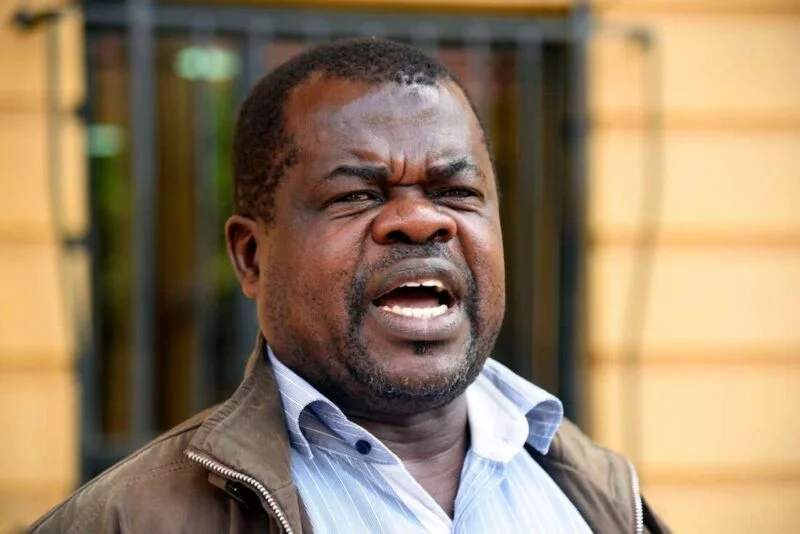
Busia Senator Okiya Omtatah was among those who had gone to court to challenge the role of the national tallying centre. PHOTO/UGC.
The real issue is not whether the IEBC has the power to verify. The courts have repeatedly answered that question in the affirmative. The more difficult constitutional question concerns the scope and limits of verification once results have already been declared and certified at constituency level.
This is where the 2017 Maina Kiai decision remains highly relevant. In that landmark judgment, the Court of Appeal held that presidential results declared by constituency returning officers are final and are not subject to confirmation, alteration or variation at the national tallying centre.
What remained for the IEBC was to collate and tally the results from the 290 constituencies before determining the national outcome. The court went further and warned that any attempt by the commission to alter or rectify constituency results would effectively usurp the role of an election court.
The apparent tension between Maina Kiai and the High Court’s latest ruling is where the legal debate becomes particularly interesting.
The High Court held that the IEBC must verify presidential results nationally. Simultaneously, it ruled that the commission cannot add, subtract, cancel, revise or otherwise alter any figures certified by constituency returning officers. The court further reaffirmed that constituency results remain final unless challenged before an election court.
That raises a legitimate constitutional question: if constituency results are final and cannot be altered, what precisely distinguishes verification from aggregation?
The High Court’s answer is that verification means checking whether national figures correspond with certified constituency returns. That is a defensible interpretation. Yet critics may argue that it leaves unresolved questions about the legal consequences of any discrepancy uncovered during the verification process.
If a discrepancy is discovered but the commission lacks the authority to alter constituency results, then verification appears to function largely as an exercise in authentication and transparency rather than substantive review.
Indeed, the court directed that any discrepancy between electronically transmitted and physical records must be documented and publicly explained, while maintaining that the polling station result prevails.
This is where I believe an appellate court may be called upon to provide greater constitutional clarity.
One possible interpretation is that the Constitution draws a distinction between electoral facts and constitutional outcomes. Under this view, constituency returning officers determine electoral facts by establishing how many votes each presidential candidate received within their jurisdictions.
The national commission then determines the constitutional outcome by assessing whether those already established facts satisfy the requirements for election to the presidency.
If a higher court were to embrace that distinction, it could conclude that the commission’s role is largely confined to aggregation, authentication and threshold assessment rather than substantive verification of vote totals themselves.
Equally, an appellate court could affirm that verification necessarily involves a broader examination of documentary consistency throughout the electoral chain and is therefore inseparable from the commission’s constitutional responsibilities.

Wiper Patrotic Front presidential aspirant Kalonzo Musyoka has been pushing for presidential results declared at the constituency level to be final. PHOTO/FILE.
Either conclusion would strengthen Kenya’s electoral jurisprudence by providing much-needed clarity before the 2027 General Election.
Significantly, the High Court itself appeared to acknowledge that Kenya’s electoral framework remains a work in progress. The judges urged Parliament to consider reforms ahead of the next election and invoked philosopher John Rawls’ concept of the “veil of ignorance”, encouraging lawmakers to design electoral rules without knowing which political interests might benefit from them.
That observation deserves careful attention. Electoral laws should never be tailored to favour incumbents, opposition leaders or any particular political formation. Their purpose is to guarantee public confidence in the democratic process regardless of who emerges victorious.
Viewed in that context, the current debate extends far beyond today’s political rivalries. It is not fundamentally about President William Ruto, Kalonzo Musyoka, Rigathi Gachagua, Edwin Sifuna or Okiya Omtatah. Rather, it is about institutional design, constitutional clarity and the integrity of the electoral process itself.
The legitimacy of a presidential election depends not only on who wins but also on whether citizens trust the process that produces the winner. For that reason, I believe the opposition has a credible legal basis to seek further judicial interpretation from a higher court, not necessarily because the High Court was wrong, but because the relationship between constituency finality and national verification remains one of the most important unresolved questions in Kenya’s electoral law.
In mature democracies, constitutional disputes are not signs of institutional failure. They are evidence of institutions performing their intended role. Courts interpret the law, litigants challenge interpretations and appellate judges provide greater clarity. Through that process, constitutional democracies refine their rules and strengthen public confidence.
Whatever the eventual outcome, Kenya stands to benefit from a definitive judicial pronouncement that removes ambiguity from one of the most sensitive aspects of its electoral system. Democracy, after all, is not merely about counting votes.
It is about ensuring that every stage of counting, aggregation and declaration commands public trust. In a country where electoral legitimacy has often shaped political stability, that trust remains the most important result of all.
